
'Reports of hitherto 'atmanirbhar' breadwinners having to stand in line for a plastic bag of khichdi or, travelling thousands of kms with nothing but packets of biscuits, have not moved the prime minister,' observes Jyoti Punwani.

'It is obvious that the lakhs who come to see it do not see it through the prism of religion,' says Jyoti Punwani.

Strident Hindutva has not been the Shivraj Singh Chouhan's hallmark in his long tenure as chief minister. What has changed?
'It's not only what's been done politically. It's also the way it's been done. It's the suffocating atmosphere.'
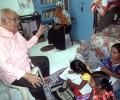
'I've seen the craze for English education even among the poorest. But that is only for their sons. Parents feel thrilled when they see their sons going to school wearing a tie. They don't mind paying for their sons' private tuitions too.' 'But daughters are sent to municipal schools, madarsas, small schools where teachers with no teaching skills are paid Rs 2,000 or Rs 4,000. That's why more girls come to my class.' Syed Feroze Ashraf, who has sent 500-odd girls (and a few boys) -- all first generation learners, children of grave-diggers, hawkers, rickshaw-drivers, tailors and watchmen -- to college, speaks to Jyoti Punwani. A Rediff.com Special.

'Is the application the Press Council's voice or the government's? 'It has been reported that other members of the PCI were taken aback at the Press Council's application. 'These members need to publicly question the chairman to redeem their own positions,' says Jyoti Punwani.
'Across the country -- in Tamil Nadu, Jharkhand, Manipur, Delhi, Bihar, West Bengal -- men were lynched on suspicion of being thieves by ordinary people armed with rods and sticks.' 'But none of these lynchings made big news.' 'None of these lynchings were cow/beef-related.' 'The perpetrators were unknown people, not so-called gau rakshaks.' 'So why were these instances of mob violence considered less newsworthy than cow-related lynchings?' asks Jyoti Punwani.

'How can we be silent when we see millions of Adivasis being displaced? Do we have a choice whether to speak or not?' 'My treatment this time was worse. Last time at least they didn't deny me medicines; those bought from outside were given to me. This time, even medicines bought at my expense were not given to me.'

'When Irshad Khan approaches the Supreme Court, he will undoubtedly have the best and most committed of lawyers to represent him.' His case will be reported on the front pages.' Neither the BJP government in Rajasthan nor at the Centre can stop this,' says Jyoti Punwani.
'In the districts of Jagdalpur and Dantewada, the only time the accused walked out of jail was when they were acquitted. There is no concept of bail.' 'The women were very clear -- they had to fight. Remaining silent any longer was not an option.'
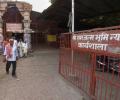
'The Babri Masjid wasn't just a mosque, it was a test of our secularism,' says Jyoti Punwani.
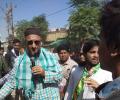
'Had Muslims been a vote bank, they wouldn't be in the condition they are now,' Asaduddin Owaisi tells Jyoti Punwani.
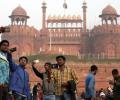
'How can the monument where the prime minister unfurls the flag on Independence Day, in a ceremony broadcast and telecast nationally, be maintained by a private entity?' asks Jyoti Punwani.
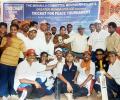
Mumbai's 45 mohalla committees and the many voluntary groups working to bring communities together in the city can be counted upon to do their utmost to stop riots.

The uncle versus nephew fight for the spiritual leadership of the Dawoodi Bohras enters the court-room, spilling family secrets and exposing the divide in the community. Jyoti Punwani reports.
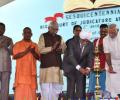
'If ever there was a decisive moment in the history of the Supreme Court where it has been under attack by the Executive, and the judges have boldly stood up for independence of the Judiciary, that time was now.' 'These four judges did a brilliant thing, they set an example.' 'They showed that they were fulfilling their duty to the Constitution and to God.' 'Don't allow fear to dictate your actions was their message.'

'Mumbai's killings in January 1993 came at the tail end of two outbursts of vicious communal violence, whereas today, it's peacetime in a 'new India'.' 'At that time, the perpetrators warned onlookers to keep their mouths shut.' 'Today, the perpetrators take videos of their attacks, such is their confidence.' 'The mobs have succeeded in terrorising an entire community and indeed, all those dealing in the transport of cattle, whatever their religion,' says Jyoti Punwani.
'The cow is sacred to many of us, but these killings are definitely not part of the Hinduism we know and practise,' says Jyoti Punwani.
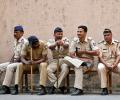
'When you read that for the first time, areas in Gujarat dominated by Patidars/Patels have been declared 'sensitive' for the civic polls that were held this week, you sit up and take note,' says Jyoti Punwani.
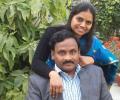
'He has not done any harm to anyone. Yet you give him life imprisonment.' 'We were told to respect the Constitution. That is what Sai is doing; he is not doing anything beyond the Constitution.'

'They will talk about secularism, but communalism -- they just won't say there exists such a beast.' 'It's harmful for society to brush it under the carpet.' 'If we talk about secularism, we must talk about communalism.'
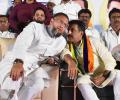
Has Owaisi's MIM become an albatross for Imtiaz Jaleel, former journalist and the party's candidate in Aurangabad?

The RSS uses its resentment against mosques and loudspeakers to stoke anti-Muslim feelings among other Hindus, whenever it can, be it during riots, or before elections, says Jyoti Punwani.
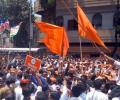
For it's not the Sena alone that indulges in hooliganism. 'Thokshahi', as the Sena proudly calls it, is the hallmark of the party and of its offshoots. But other parties haven't exactly been models of good behaviour. Not just Maharashtra, ministers and MLAs slapping officials everywhere in the country is not unheard of, says Jyoti Punwani.
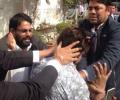
When an accused gets attacked on the way to court, and again within the court premises, with no intervention by a judicial officer, which space is safe, asks Jyoti Punwani.

'For people who are fed on nothing else but the media, what were prejudices become facts of life.' 'What my neighbour may see as just news, for me is a source of fear, living as I do, surrounded by non-Muslims.' 'So I would say it is important to talk to a Muslim, be it your neighbour or your colleague.' 'Have that conversation about what's happening to Muslims.'

'The Quran says that saving one life is like saving humanity. So by donating for Kerala, you are following what Allah told you.' 'This gesture would create goodwill for Muslims and would work as a counter to the hostility they face.' Jyoti Punwani reports how some Muslims won't sacrifice goats this Bakri Eid, instead donating the money towards relief efforts in Kerala.

This theory of 'Hindus vs the rest' sees the two communities as two separate blocs. Isn't that the two-nation theory? What of the deep bonds that the communities have on the ground? asks Jyoti Punwani.
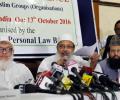
When the Muslim Personal Law Board promises 'advisories' and nikahnamas to the Supreme Court, one has to remember not only its recent campaign against any change in Muslim personal law, but also its past record of inaction on the question of triple talaq, says Jyoti Punwani.

'When you start delving deeper into these disappearances, you have to face the question: Was it a policy at the State level?' 'It surely couldn't have been random officers acting on their own.' 'Was it planned? What does it mean if the State allows its police to become lawless and act with impunity?' 'Perhaps the NHRC, for the 21 years that it has been seized of the matter, avoided these questions.'
'If a Delhi University professor's rights can be violated so easily, then think about what the rest of the population, with even lesser means, has to suffer under the State.'

'It is difficult to imagine the BJP becoming the legatee of Ambedkar. Whichever way one looks at it, Ambedkar's thought and Hindu nationalism are not easy to reconcile.'

'The educated, employed, and self-sufficient Dalit is being attracted towards the BJP. The middle-class that has rapidly emerged among Dalits in the last two decades has deviated from its path. It has become a traitor to its own class. It cannot distinguish between a friend and an enemy.'

'What of Modi? They are willing to take their chances. Maharashtra's Muslims recall how the Congress scared them with the Bal Thackeray bogey for decades, yet, when it came to using all the might of the State to protect them from Shiv Sena goons, be it in 1970, 1984 or 1992-1993, it did nothing. For them, the Congress's secularism is a cruel joke.' 'This argument that we ('seculars') must vote for the 'winning secular candidate' has one more implication: Those who are against Hindutva must forever be stuck with the same corrupt, cynical and tired old parties, who are not even secular,' says Jyoti Punwani.

Dhananjay Desai has been allowed to spread his poison to young men in Maharashtra and Goa over the last five years, by a 'secular' Congress-NCP government. The 23 cases pending against him have not stopped him. He and his supporters must have thought they were immune when they lynched a bearded Muslim at night. Neither Desai nor his followers, nor the police, nor their 'secular' political masters, must have expected the nationwide furore that followed, says Jyoti Punwani.

'The forces of good are on the run.' 'But dark times also challenge people to fight.' 'I believe Indians will rise against these dark times.'

The curative petition and other legal remedies still available to Yakub Memon are part of his rights as a prisoner condemned to death. Does the Maharashtra government want to deprive him of these rights, asks Jyoti Punwani.
'People are beaten at the slightest provocation, paraded completely naked and then tortured. Did you know the number of prison deaths is the highest in Maharashtra? The one year I was in jail, 98 prisoners died.' 'The judges did warn the jail authorities, but they didn't care. They even violated the high court's order regarding my treatment. One judge asked my lawyer: "Can I go and implement my orders there?"' Professor G N Saibaba, who is 90 per cent handicapped, speaks of his ordeal in a Nagpur jail after being arrested for protesting against the Centre's anti-Naxal and anti-Adivasi campaign.

'No one talks about the Mumbai riots anymore, though like Delhi 1984, the guilty have not been punished. In Gujarat, many powerful leaders of the state's ruling party are in jail for their role in the riots... In Mumbai, only one politician of the Shiv Sena, a former MP, was convicted of hate speech, along with two other Shiv Sainiks, one of whom was a corporator and the other a junior functionary... So why the apathy? Could it be because despite these statistics and the widely-publicised findings of the Srikrishna Commission, what remained in public consciousness was the violence by the Muslims, thanks to a highly efficient Sena propaganda machine? There's no demand for it, but would an SIT probe into the closed cases of the Mumbai riots help today?' The fadeout of Mumbai's riots from public debate can be called a triumph of the communal State, argues Jyoti Punwani.
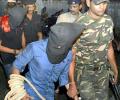
'Counter terrorism does not appear to be good guys fighting the bad ones; it is about people being picked up, detained and charged with crimes they did not commit.'
